How to build credit score from scratch?
How to Build a Credit Score From Scratch in India Guide
Building a credit score from zero is less about borrowing large amounts and more about showing steady, responsible behaviour over time. In India, a credit score is created only when a regulated lender reports an active credit account along with repayment activity to credit information companies. Simply earning an income or saving money does not generate a score. What matters is how credit is used and repaid.
Many first-time borrowers run into a frustrating loop. Without a credit history, approvals become difficult. And without approvals, there is no way to create a credit history in the first place. This situation is common among students, young professionals, homemakers, and anyone who has relied only on cash or debit cards.
The key to breaking this loop is starting small and choosing credit products designed for beginners. Options like secured credit cards or small, well-structured loans allow repayment behaviour to be recorded without taking excessive risk. Paying dues on time, keeping usage low, and avoiding multiple applications help build trust gradually.
This guide focuses on practical, realistic steps to build a credit score from scratch, without rushing into debt or damaging long-term financial health.
What It Means to Have “No Credit Score”
Having a “no credit score” or “NA” status simply means there is not enough recent credit activity on record to generate a score. This situation is common in India among students, first time salaried employees, homemakers, freelancers, and individuals who have relied mainly on cash, UPI, or debit cards for their expenses. It does not indicate poor financial behaviour or low income. It only shows that lenders do not yet have enough data to assess borrowing habits.
A credit score is not created by earnings, savings, or employment status alone. It is built through visible credit behaviour that gets reported by regulated lenders. This includes taking a loan or credit card, using it within limits, and repaying dues on time. Without any active credit account, there is nothing for lenders to evaluate, which is why a score does not exist.
Understanding this distinction is important. A no score status is neutral, not negative. It simply means the credit journey has not started yet, and it can be built gradually with the right first steps.
How Credit Scores Work in India
In India, credit information companies operate under a legal framework and lenders share borrower repayment data with them. Most consumer credit scores in India are on a 300 to 900 range, and higher scores generally indicate lower risk.
Lenders typically evaluate:
- Payment history (on time vs late)
- Credit utilisation (how much of the limit is used)
- Length of credit history (older is better)
- Credit mix (secured and unsecured balance)
- Recent enquiries (too many applications can hurt)
What Actually Builds a Score
A credit score starts forming when three things happen together:
- A credit account exists (credit card, loan, or line of credit)
- The lender reports it to credit bureaus (usually in cycles)
- Repayment and usage behaviour is recorded consistently
That is why simply applying for a card does nothing unless it is approved and used responsibly.
The Credit Score Catch 22 and How to Break It
A common situation looks like this: a credit card is needed to build a credit score, but a credit score is needed to get a credit card.
The easiest, safest way to break this loop is to start with products designed for first timers, where approval depends less on past credit history and more on security or relationship.
Examples that commonly help first time borrowers:
- Secured credit card (FD backed credit card): credit limit is backed by a fixed deposit, making approval easier while still creating credit history when used responsibly
- Add on credit card: being added as an authorised user on a family member’s card can sometimes help create visible credit behaviour, depending on issuer reporting practices.
- Small ticket consumer durable loan from a regulated lender: useful only if repayments are fully manageable and the lender reports consistently.
Step by Step Plan to Build Credit From Scratch
Step 1: Start with one credit product only
Pick one starter product and focus on building a clean record for at least 6 months. More accounts are not better in the beginning.
Best starter option for many people: FD backed secured credit card.
Step 2: Keep utilisation low from month one
If the card limit is ₹20,000, keep monthly usage ideally under ₹6,000 (around 30%). Low utilisation signals control.
Step 3: Pay on time, every time
This is the single biggest factor that builds trust. Set auto debit for at least the total due. Never rely on memory.
Step 4: Avoid multiple loan and card applications
Every hard enquiry can reduce the score temporarily. Apply only when eligibility is strong and paperwork is ready.
Step 5: Keep the first account active
Credit age matters. Closing the first credit card too early can reduce the average age of credit history.
Step 6: Prefer transparent loans with clear disclosures
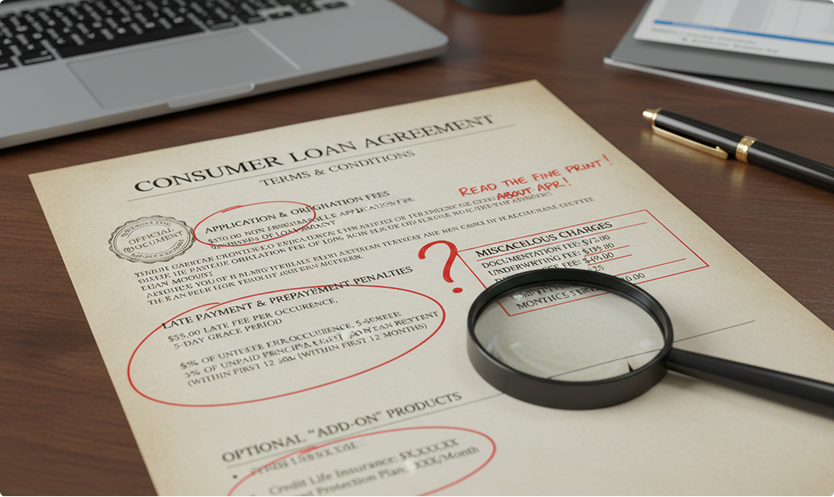
For digital loans, banks and NBFCs are expected to provide a Key Fact Statement (KFS) and clearly mention the interest rate and total cost. This helps borrowers understand what they are signing up for. Clear information matters because confusing charges and unclear pricing often lead to missed payments, which can harm the credit record.
Step 7: Build slowly before upgrading
After 6 to 12 months of clean repayment, unsecured cards and better loan terms become easier.
The Biggest Mistakes That Slow Credit Building
- Paying only minimum due on a credit card repeatedly
- Using 80 to 100% of the limit each month
- Missing even one EMI or card due date
- Taking multiple short tenure loans just to “create history”
- Closing the oldest card too soon
- Applying across many lenders in a short period
How Long It Takes to Get a Credit Score
Credit reporting updates are not instant. Many changes reflect after a few reporting cycles. A common expectation is 2 to 3 months before a visible change shows up, depending on reporting frequency and the lender.
If a brand new account is opened and used responsibly, a score often becomes visible within a few months.
How to Track and Fix Errors in a Credit Report
Credit reports can contain errors such as:
- Wrong personal details
- A loan shown as active when it is closed
- Incorrect overdue amount
- Duplicate accounts
Under the Credit Information Companies (Regulation) Act, 2005 framework, credit information companies and lenders have defined responsibilities around credit information and corrections.
If something looks wrong:
- Raise a dispute with the credit information company
- Raise a complaint with the lender that reported the data
- Keep all closure letters and payment receipts as proof
The Bottom Line
Building a credit score from scratch in India is essentially about demonstrating reliability, not about borrowing more than necessary. A credit score improves when lenders can see consistent, disciplined repayment behaviour over time. The safest way to begin is by choosing a single, beginner friendly credit product and managing it carefully. Keeping credit utilisation low, paying all dues on or before the due date, and avoiding unnecessary applications form the foundation of a healthy credit profile.
Many people struggle with the common situation where a credit card is required to build a credit score, but a credit score is required to get a credit card. This loop can be broken through products designed for first time borrowers, such as secured credit cards backed by a fixed deposit. These products reduce the lender’s risk while still allowing repayment behaviour to be reported, making them an effective starting point.
Credit building is not instant, but it does not take years either. With regular usage and timely repayments, a credit score often starts becoming visible within a few months. As this record strengthens, access to better loan terms, higher credit limits, and unsecured credit options gradually improves. The key is patience and consistency. Starting small, staying disciplined, and allowing time to work in your favour can create a strong credit foundation without unnecessary financial stress.
FAQs
How to start building credit score in India?
Building a credit score in India starts with opening at least one credit account with a regulated lender. This could be a secured credit card, an entry-level credit card, or a small loan that fits the monthly budget. Using the credit regularly, keeping utilisation low, and paying all dues on time helps create visible repayment behaviour. Consistency over a few months is what begins the credit journey.
What is the 2 2 2 credit rule?
The 2 2 2 credit rule is an informal guideline used by some borrowers to build credit steadily. It suggests using credit no more than twice a month, keeping utilisation under 20 to 30 percent of the limit, and paying dues at least two days before the due date. While not an official rule, it promotes disciplined usage and timely repayment, which supports score improvement.
How to get a 700 credit score in 30 days?
Reaching a 700 credit score in 30 days is usually not realistic for someone starting from zero. Credit scores improve as lenders report repayment data over time. However, reducing high card usage, clearing overdue payments, and avoiding new applications can lead to small improvements within a month if a score already exists.
How to get 750 CIBIL score?
A 750 CIBIL score is built through consistent credit behaviour over several months. This includes paying EMIs and card bills on time, maintaining low credit utilisation, limiting loan applications, keeping older accounts active, and having a balanced mix of credit. There are no shortcuts, but disciplined repayment steadily moves the score upward.